
Beginning Sounds Worksheets
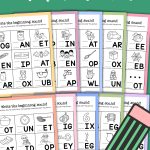
The journey into reading starts with a single sound. Before children can read words or write sentences, they need to understand the foundational connection between letters and sounds.
This concept, known as phonemic awareness, is one of the most essential stepping stones in early literacy. That’s where beginning sounds worksheets come in—especially your beautifully designed pack focused on simple 3-letter words and colorful picture cues.

This article will explore how these worksheets work, how they can be used both at home and in early learning classrooms, and why they’re so helpful for young children learning to identify the sounds of the alphabet and start writing.
Jump to:
What Are Beginning Sounds Worksheets?
Beginning sounds worksheets are targeted literacy tools that help children learn to recognize the initial sound in a word. Your pack includes 10 engaging worksheets, each featuring:
- Simple three-letter words (CVC words like cat, dog, bat, etc.)
- Clear picture clues to represent each word
- A space for children to identify and write the first letter of each word
- Cute images that children can color for added fun and engagement
These worksheets combine visual, auditory, and kinesthetic learning—making them ideal for early learners who are just starting to decode the mysteries of the alphabet.
Expand your child’s phonics skills with these informative books that target and teach important advanced concepts: prefixes, suffixes, vowel team exceptions, multisyllabic words, and more. Each title features clear photos, just-right decodable text, and lively real-world topics such as mammals, insects, life cycles, wild weather, space, and so many more. Includes a family guide and mini-workbook to reinforce learning.


Why Beginning Sounds Matter in Early Literacy
Identifying beginning sounds is a key part of phonemic awareness. When children can hear and isolate the first sound in a word, they’re one step closer to learning how letters form words. Mastering this skill supports:
- Letter-sound correspondence
- Spelling and writing skills
- Sound blending and word decoding
- Confidence in independent reading
According to the National Reading Panel, early phonemic awareness is one of the most reliable predictors of reading success. Helping children master beginning sounds in a low-pressure, fun environment gives them the tools they need to move on to more complex literacy tasks later.
What Makes These Worksheets Effective?
Your beginning sounds worksheet pack is thoughtfully designed with young learners in mind. Here’s what makes it especially effective:
🎨 Visual Support Through Pictures
Each word is paired with a clear, age-appropriate picture. For example, a picture of a sun for the word "sun" helps the child connect the image to the word’s initial sound.
This use of visual cues supports early readers who may not yet recognize the entire word but can associate the beginning sound with what they see.
Team up this free download with these phonics flash cards. They're unlike any basic flashcards.
They're created And recommended By teachers and come with Level 1 phonics for kindergarten + cvc words blending; Level 2 consonant blends + digraphs; Level 3 long vowels + diphthongs; Level 4 trigraphs + silent letters.

✏️ Focused Practice on 3-Letter Words
The use of CVC (consonant-vowel-consonant) words like “cat,” “bat,” “hat,” and “dog” provides a simple and consistent structure for learning. These words are easy to sound out and are often among the first that children learn when beginning phonics.
Limiting the focus to 3-letter words removes the overwhelm and helps children build confidence and fluency.
🔤 Alphabet Sound Reinforcement
Each worksheet helps kids practice recognizing and writing the correct beginning letter sound. For example:
- Picture of a bat → Identify the /b/ sound → Write the letter B
- Picture of a pig → Identify the /p/ sound → Write the letter P
This direct connection between hearing a sound, identifying the letter, and physically writing it helps reinforce the alphabet in a memorable, multisensory way.
🎉 Coloring for Creativity and Focus
The option to color the images adds a layer of fun and keeps children engaged. Coloring also helps:
- Develop fine motor skills
- Improve hand-eye coordination
- Offer a calming, creative break between writing tasks
This balance between learning and play makes the experience enjoyable and encourages kids to keep practicing.
How to Use These Worksheets at Home or in the Classroom
Whether you’re a parent, homeschooler, or preschool teacher, these worksheets are flexible and easy to use. Here are several tips for incorporating them into daily learning:
1. One Letter at a Time
Introduce one worksheet per day or week, depending on your child’s readiness. Focus on repeating the beginning sound of the word aloud:
“Buh-buh-bat. What sound does bat start with?”
Repetition helps kids develop automatic sound-letter associations.
2. Sound It Out Together
Model how to sound out the word and emphasize the first sound:
“Ssssssun. That starts with ‘S’!”
Encourage your child to repeat the sound, then trace or write the letter on the worksheet.
3. Pair with Alphabet Songs and Books
Use alphabet songs, phonics videos, or beginner books like Chicka Chicka Boom Boom to reinforce letter sounds before or after worksheet time.
4. Create a Sound Hunt
After completing a worksheet, go on a “sound hunt” around the house or classroom:
“Can you find three things that start with ‘B’?”
This encourages active learning and sound awareness beyond the page.
5. Use Dry Erase Sleeves for Practice
Place the worksheets in reusable plastic sleeves and use dry-erase markers. Kids can practice over and over—great for group learning or extra repetition.
The highly effective card game that helps kids master phonics and improves reading – it’s so fun that children won't even know they're learning!
Finally, a way to make phonics fun!

What Skills Are Kids Building?
Your beginning sounds worksheets support a wide range of early literacy and development goals, including:
✅ Phonemic Awareness
Children are learning to isolate and pronounce the first sound in a word—an essential precursor to reading fluently.
✅ Letter Recognition
By identifying and writing the correct starting letter, kids are building a strong foundation for recognizing letters and connecting them to their sounds.
✅ Writing Practice
Each worksheet gives children the opportunity to trace or write letters, building early handwriting confidence and pencil control.
✅ Vocabulary Development
By seeing familiar images and associating them with words, children naturally expand their vocabulary and word awareness.
✅ Focus and Task Completion
Completing a worksheet—especially one that includes coloring and a simple writing task—encourages focus, attention to detail, and the satisfaction of finishing a learning activity.




Comments
No Comments