
Goal Worksheets For the Whole Year
Teaching young children the value of goal setting is one of the best ways to cultivate responsibility, focus, and perseverance.
Goal setting worksheets designed for kids aged 5-7 can play a huge role in this developmental journey, helping them outline personal and academic goals in a fun and engaging way.
These worksheets not only encourage kids to think about their future but also offer a platform for expressing their dreams through writing and drawing.
Jump to:
Why Goal Setting Is Important for Kids
- Builds a Sense of Responsibility: For young children, setting goals instills a sense of ownership over their actions and progress. Whether it's learning new math skills, reading more books, or improving handwriting, goal setting helps them understand that they play an active role in achieving their desires.
- Encourages Focus: In a world full of distractions, having a clear goal helps kids stay focused. By writing down what they want to accomplish, children can concentrate on specific tasks rather than feeling overwhelmed by everything at once.
- Promotes Perseverance and Resilience: Goal setting teaches children that challenges are part of the process. Kids learn that goals may take time to achieve, and this nurtures perseverance. It also provides a chance to experience small successes along the way, building their resilience for future challenges.
- Develops Self-Reflection: These worksheets are also a great opportunity for self-reflection. Children can think about what areas they want to improve, assess their current abilities, and determine the steps needed to reach their goals. This reflective practice fosters self-awareness from an early age.
- Encourages Creative Expression: With sections for both writing and drawing, these goal-setting worksheets allow kids to express their aspirations creatively. This is especially important for children who may not yet have the vocabulary to express their thoughts fully but can do so through pictures.
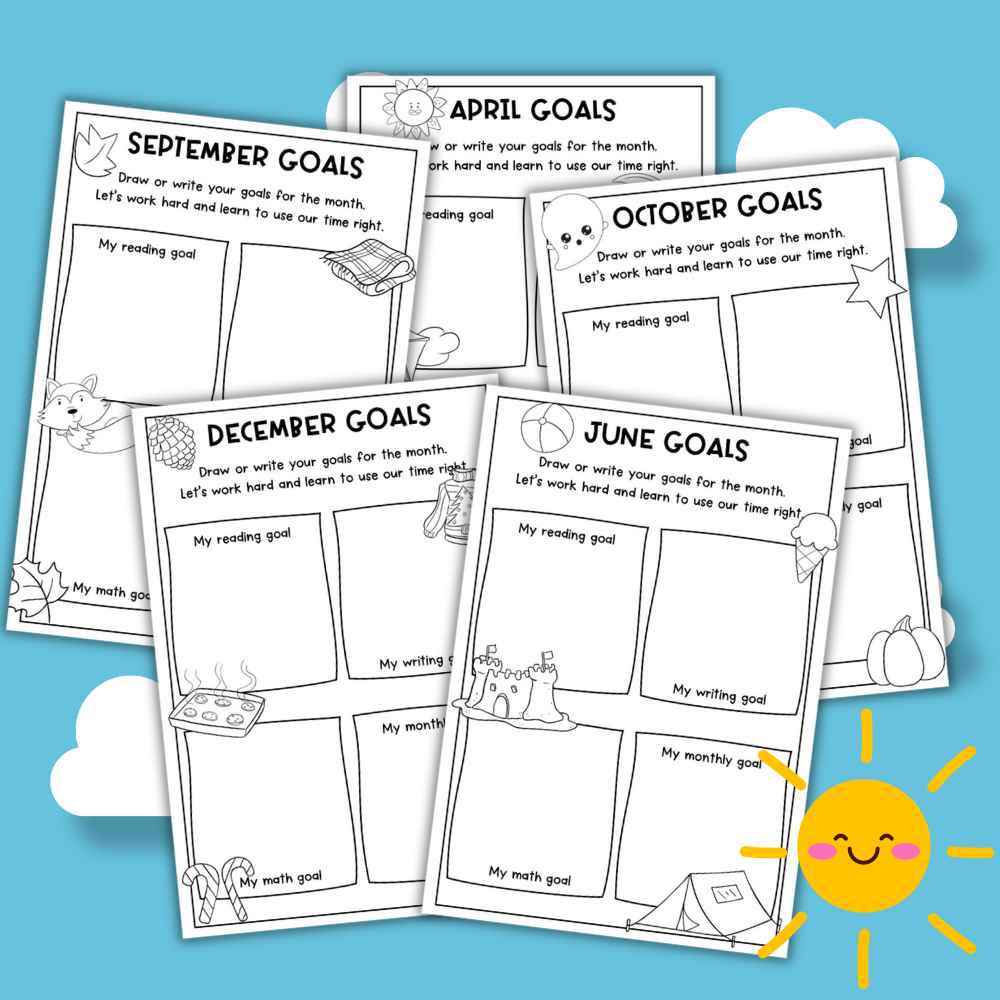
Components of the Goal Setting Worksheets
These goal-setting worksheets are designed to be accessible and enjoyable for children. Here’s a closer look at the key components included:
Math Goals Section
Math can be a challenging subject for some kids, while others may excel in it. Setting math goals encourages children to focus on specific skills they'd like to improve or master.
How It Helps
- Builds Confidence: Writing down goals such as "I want to learn my times tables" or "I will count to 100" gives kids something to work towards, making the subject less intimidating.
- Tracks Progress: Children can mark off their progress, whether they’re learning to add and subtract or practicing basic shapes and measurements.
Ideas for Goals
- "I will learn to count to 100 without help."
- "I will practice my addition facts every day for 10 minutes."
- "I will understand how to tell time."
Reading Goals Section
Reading is foundational to all areas of learning. The reading goals section encourages kids to set attainable objectives related to their reading skills, fostering a love for books and literacy.
How It Helps
- Fosters a Love for Reading: Setting goals such as reading a certain number of books per week or improving reading fluency encourages kids to see reading as a fun activity.
- Improves Comprehension: As kids work on their reading goals, their comprehension and vocabulary naturally improve, laying the groundwork for academic success.
Ideas for Goals
- "I will read 2 books every week."
- "I will practice reading out loud every day."
- "I will learn 10 new words this month."
The Weekly Success Journal for Kids is a guided journal designed to teach children the skills they need to succeed at any task through a growth mindset. The ultimate goal of this journal is to help children develop life habits that will serve them well in any life endeavor - from school, to work, to their personal life.


Monthly Goals Section
The monthly goals section helps children plan ahead, think about the bigger picture, and break down their ambitions into smaller, more manageable tasks.
How It Helps
- Promotes Long-Term Thinking: Monthly goals help kids see the value of planning ahead, encouraging them to think about what they want to achieve over time.
- Establishes Accountability: Having a longer-term goal encourages kids to stick with their plans, fostering responsibility.
Ideas for Goals
- "This month, I will practice writing the alphabet every day."
- "I will learn how to ride my bike without training wheels."
- "I will complete a puzzle by myself."
Writing Goals Section
Writing is an important skill that supports communication and creativity. This section provides kids with the opportunity to focus on improving their handwriting, spelling, or storytelling skills.
How It Helps
- Encourages Creative Expression: For kids who enjoy telling stories or drawing, writing goals give them a platform to improve their creativity and expression.
- Boosts Writing Skills: Whether it’s mastering letter formation or writing short sentences, setting writing goals ensures that kids improve in one of the most critical areas of early learning.
Ideas for Goals
- "I will practice writing my name neatly every day."
- "I will write a story with three sentences this week."
- "I will write five new words I learned from reading."
Tips for Using the Goal Setting Worksheets
- Guide and Support: At ages 5-7, children may need guidance when setting goals. Sit with your child as they fill out their worksheets, helping them brainstorm ideas for achievable goals. Ensure the goals are specific, measurable, and appropriate for their skill level.
- Celebrate Achievements: When your child reaches one of their goals, celebrate their success! This could be with a small reward, words of praise, or even adding a sticker to their worksheet. Recognizing their progress boosts confidence and motivates them to continue striving for more.
- Set Realistic Expectations: Encourage your child to set goals that are challenging but realistic. Overly ambitious goals can lead to frustration, while goals that are too easy may not promote growth. Finding the right balance ensures a positive experience with goal setting.
- Make It Fun: Incorporate fun elements into the worksheets, such as letting your child decorate the sheet with drawings, stickers, or colors. When kids enjoy the process of setting goals, they’re more likely to stay engaged and excited about their progress.
- Review Goals Regularly: Take time each week or month to review the goals your child has set. This helps track progress and allows them to reflect on what’s working and what might need adjusting. It also gives you an opportunity to provide encouragement and discuss any challenges they might be facing.
Goal setting is an important life skill that helps children develop responsibility, focus, and perseverance.
These goal-setting worksheets for kids aged 5-7 make the process fun and accessible by allowing children to write and draw their goals in areas like math, reading, and writing.
By setting goals and tracking their progress, kids not only improve their academic abilities but also build confidence and resilience that will benefit them throughout their lives.
These worksheets are a valuable tool for parents and teachers looking to foster personal growth and academic achievement in young children.
With guidance and encouragement, kids can set goals, work towards them, and celebrate their successes, all while developing a lifelong love of learning.


Comments
No Comments